Done it!

A quick thank you to everyone who helped during my training and supported me along the way to the finish line in Brighton.  It took some doing but I eventually finished the event in just under 6 hours.  I managed to raise over £1200 for the CF Trust and finished tired but uninjured, and happy that it had gone so well.

So, what’s next? Not sure yet, but I’m already thinking about next year’s project. The logistics of a London to Brighton Event were incredibly complicated so that is definitely a factor to consider. There are plenty of northern based events that I would like to do and the Manchester 100 miler is on my doorstep so, who knows what lies in store. Whatever I decide I have no doubt that I will blogging about it, so please keep checking in for updates.

On a final note I just wanted to thank everyone who donated.  The fundraising page has now been closed and the money should be with the CF Trust shortly.  They are doing amazing work and hopefully the donations will help to fund their research into the causes of and treatments for Cystic Fibrosis.

Simon


Papa vs Babas – Warm Weather Training – August 2019

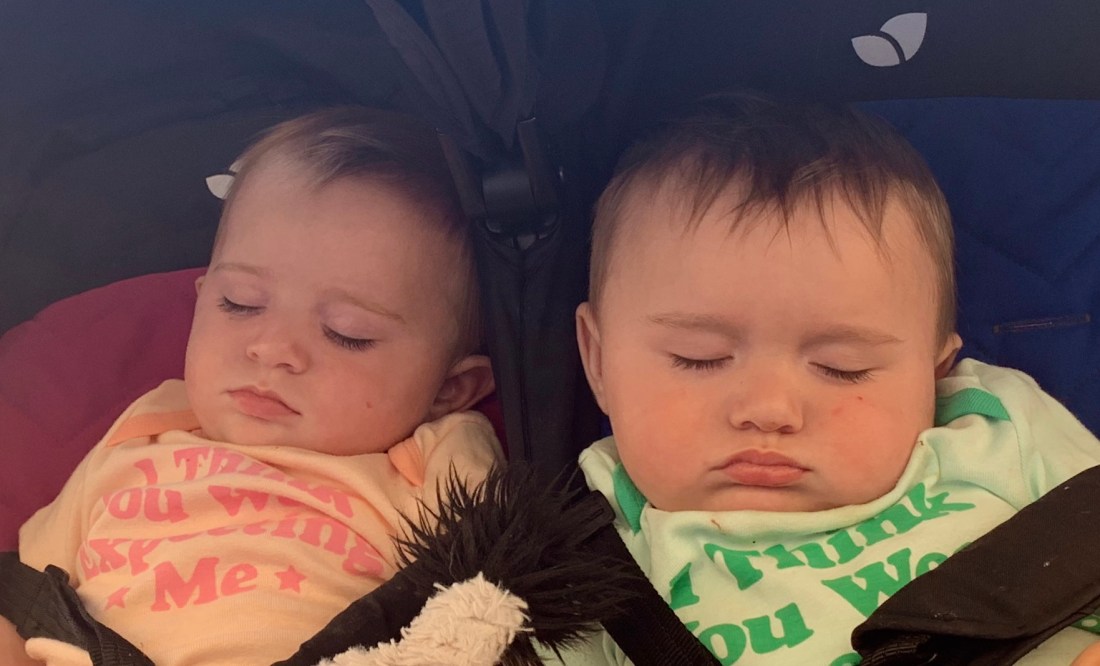
I was fortunate enough to take a family break in Portugal this year.  As it was in the middle of my current L2B (London to Brighton) training cycle, I decided that it was important that I kept my fitness levels high and with that in mind, I nominated myself as Chief Pram Pusher and volunteered to take the twins (F and H) out as many times as necessary to get them to sleep.  How difficult could it be?

Day 1 – 15,279 steps

Salema is (was) a sleepy, fishing village in the Algarve and is rightly famous for its beautiful beach.  However, the hills into and out of it were like a cobbled rollercoaster which the babies seemed to love.  Although I never caught them at it, I could easily imagine them waving their hands above their heads as we negotiated the steep climbs and falls.

I got off to an early start today.  The twins were tired from all the travelling yesterday, so I decided to take a gentle stroll down to the beach.  When the clear blue sea recedes at low tide you can walk for miles along its white sandy shores unless of course you are trying to push a pram which quickly becomes a plough that digs itself deeper and deeper into the iconic white sand.  Not a good look and not one I expect to see featured in any of their tourism brochures.

I could have claimed a ‘win’ as the babas were sleeping deeply but having to dig them out of the sand and not make any sandcastles, reduced it to a draw.

Babas 0 Papa 0

Day 2 – 14,011 steps

In the swing of it now and I’ve got used to the vibration caused by the cobbles.  The pram we brought was a lightweight version that had very little suspension built into its design.  It reminded me of trying to ride my bike with a flat tyre.

The heat was stifling. I quickly checked the twins to make sure they were ok and was met with two beautiful smiles, so all was good at this point.  The twins are now 7 months old and although they were born minutes apart, they are extreme opposites in all aspects of everything.

Halfway through Lap 1, up the steepest part of the incline, the peace and quiet was suddenly interrupted by a loud piercing scream.  F’s dummy had disappeared, and he was very eloquent in voicing his annoyance and disapproval.  I felt around inside the pram whilst blocking the wheels with my feet.  Where was it? The distressed cries grew louder, much louder, to the point where I had to lift him out before windows started to shatter.  I still couldn’t find it and my anxiety levels started to spike. It was only when I checked that his sister was ok that I saw that she had a very tight grip of his dummy and was happily waving it around and grinning.  After I had gently wrestled it from her grasp, I was able to gradually reduce the noise levels.

Babies 1 Papa 0

Day 3 – 14,265 steps

I’m feeling much more in control now.  I’ve decided that the smart thing to do is to create a pre-walk check list.  My 686 months of experience should easily prevail over their collective 14 months but yesterday taught me there is always the possibility of being completely outwitted by either twin, or both.

Checklist

  1. 2 dummies and 1 spare
  2. One grey floppy rabbit
  3. One grey donkey
  4. 2 hats
  5. 2 squeaky ducks
  6. 2 cups of water
  7. 2 milk bottles just in case
  8. Some organic apple snacks
  9. Sun cream
  10. A light blanket to block out the sun/cover their legs
  11. Nappies/cream/wipes/bags
  12. Bananas
  13. Mobile phone
  14. Some euros
  15. Oh, and two babies

It went like a dream.  Both asleep within minutes.  It works!

Babies 1 Papa 1

Day 4 – 15,935

A nice positive start today, the pre-walk checklist was complete, and I deployed my full experience and acquired skills regarding optimal pram pace for sleep and they nodded off in minutes.  This is easy now.

I’d created different routes for differing times of the day.  The sun was so hot that I tried to keep the twins in the shade wherever possible.  This involved keeping close to walls and avoiding walking directly facing the sun, especially in the morning and evening, as the sun shone directly onto the beautiful twosome which was something to avoid.

What felt like a glorious and fully deserved win quickly changed to an epic fail.  I felt the twins jump as a police car raced by with its sirens blaring.  I guess it was mildly amusing that the noise after it had passed was even louder as the two pram passengers roared their disapproval at being woken in such a way.  It took me a while to resettle them but, they were still tired and after a few Papa cuddles (any excuse!) they were back in the land of slumber.

Feeling smug, I turned left and took the right side of the path to keep in the shadow.  We swept around the corner just as the groundsman started the engine of his hedge trimmer.  The babas were disturbed again and I am rapidly concluding that some days you are just not destined to win.

Babas 2 Papa 1

Day 5 – 15,964 steps

Checklist completed, route designated and away we go.

A beautiful start to the day.  The wind had dropped a little and it felt perfect.  I love spending time with my family and to be doing so in such an amazing location was fantastic.

We were rattling along, took a sharp climbing left turn and passed a man stood among the trees.  That was not unusual, but he was balancing on one leg and had his arms stretched above his head and his hands were flapping up and down.  So, being English, I nodded at him and said ‘morning’. No response, so I trundled past on lap 1 of Route C (the a.m. version).  10 minutes later, sharp climbing left turn and he was still there.  Hands flapping, stood on one leg but was making whooshing sounds now.  I must admit that I hesitated about going past, but the babies were settled, and a quick direction change could ruin everything.  I rattled past again.  Last lap coming up and I won’t deny that I was a bit unsure what I would be facing as I turned the corner again.  I had no need to worry, he was now sat cross legged on the floor playing a flute.  Just another perfectly normal day in paradise.

Babas 2 Papa 2

Day 6 – 16,968 steps

The last few days have left me pondering a few questions.

  1. Why do babies throw away their dummies and then cry because they haven’t got one?
  2. How can they be fast asleep and snoring but wake up within 0.1 seconds of the pram stopping?
  3. People who have had babies know the disaster potential of the pram not moving, why do they always want to stop and talk?
  4. How do you get twins to synchronise their sleep patterns? 

Options available:

a) Both awake

b) Both asleep

c) Baby A asleep and Baby B noisily awake.  Baby A then wakes up tired.  Baby A then goes to sleep earlier than Baby B.  Baby A then wake up noisily and disturbs Baby B who then goes to sleep earlier than A…. repeat pattern throughout the day

Question 3 reinforced today.  All it took was an ‘oh, how beautiful. Twins!’ and everything went to pieces.  Within seconds of the kind comments and smiles I had two wailing wee ones on my hands.  They were both asleep!!  I had to quickly move on.  Too late.

Babies 3 Papa 2

Day 7 – 16,522 steps

Last day.  Had a stare off with a wasp.  It didn’t stand a chance and decided it would be prudent to fly away rather than risk life and wing by going near the sleeping little ones. 

Being with the twins and their amazing big sister had made me even more fiercely protective of my family.  I am so blessed to have such special people in my life, and I know that I am one of the luckiest people on the planet.

Total steps – 108,944

Progress Update

Nothing new to report. The training is going extremely well and I am having to make sure that the difficulty progression remains gradual. It would be easy to try and complete increasingly longer and harder rides but, as an ‘experienced’ athlete, I have to accept that I have to be more careful about these things than I used to be.

With a little over three months to go, I am managing to complete two hour long rides as well as training in the gym and working on my overall fitness levels. However, still need to introduce a yoga session into my routine as my flexibility continues to deteriorate. It came as a bit of a wake up call when I saw how many climbs there were on the race route so, needless to say, I am now incorporating a lot of hill climbing in my training rides. You underestimate over 900 meters of climbing on the course at your peril. I want the day to be a difficult but fun ride and not an agonising, arduous slog to the coast.

I still haven’t worked out the logisitics of getting to London, parking before the race and then driving home on shattered legs as yet. I think the Brighton to London coach transfer after the race is a definite but I’m not sure about the rest. I’m sure it will all fall into place nearer the time.

Take care and if you see me on cycle trails in NW England then please give me a wave.

Simon

Phase 2; I’m ready for you.

I am pleased to be able to report that I have finished the first of my three training cycles (pun very much intended). This was the recover from Xmas, stagger back into the New Year, cope with the cold and darkness phase and I came through it well. Lots of static bike gym sessions, boxing and fitness DVD’s have landed me at an excellent launch point for Phase 2. The second section of my 3 tier programme involves much of the same but there will now be a gradually increasing length outdoor bike ride in the mix. I am aiming to be comfortably completing regular 2 hour rides in the beautiful Lancashire countryside before the end of June.

A quick shout out to The Gym in Bolton where most of my indoor training is done. I’ve been a member for quite a few years now and love the 24hr access, good facilites and friendly staff. I’m always amazed at how many people are already in the gym when I do my sessions though. Maybe my ‘early mornings’ are other people late starts.

There were so many CF runners at the London Marathon this weekend. I feel very much a part of a special group now and I havent done anything yet!

I have come to realise, not unsurprisingly, that a lot of things I do would be considered very ‘old school’ methodology. I wrote the first draft of this blog post using pen and paper and I universally ignore the latest celebrity endorsed fitness programmes until I’ve seen that they are still lean and mean 12 months later. However, Charlotte Crosby’s 3 minute belly blitz DVD has been a lot of fun to do, has yielded good results but it has left me with a very annoying habit of saying ‘Let’s Go’ in a geordie accent.

I will get a fundrasing page launched once the second phase is completed but in the meantime, stay safe and well.

Simon

Cystic Fibrosis is what, exactly?

I felt that it was important to get some of the facts surrounding CF into an early blog post. What better way than to replicate the CF Trust’s pamphlet ‘Cystic Fibrosis what, exactly’. If you require any more information then please visit their website http://www.cycsticfibrosis.org.uk where you will find contact details for all aspects of CF support.

In 1938, Dorothy Hansine Andersen published an article, “Cystic Fibrosis of the Pancreas and Its Relation to Celiac Disease: a Clinical and Pathological Study”, in the American Journal of Diseases of Children. She was the first to describe the characteristic cystic fibrosis of the pancreas and to correlate it with the lung and intestinal disease prominent in CF.

The basics… (Taken from the Cystic Fibrosis Trust’s ‘is what exactly’ leaflet)

What is cystic fibrosis?

Cystic fibrosis (CF) is one of the UK’s most common life-threatening inherited diseases. Cystic fibrosis is caused by a defective gene. As a result, the internal organs, especially the lungs and digestive system, become clogged with thick sticky mucus resulting in chronic infections and inflammation in the lungs and difficulty digesting food. Find out more about what CF is and how it affects the body.

How common is cystic fibrosis?

Around 10,400 people in the UK have cystic fibrosis; that’s 1 in every 2,500 babies born. Cystic fibrosis affects around 100,000 people in the world.

What causes cystic fibrosis?

Cystic fibrosis is a genetic condition. One person in 25 carries the faulty CF gene, usually without knowing; that’s over two million people in the UK. If two carriers have a baby, the child has a one-in-four chance of having cystic fibrosis.

Can you catch cystic fibrosis?

No, cystic fibrosis can’t be caught or developed; it can only be caused by inheriting two copies of the faulty gene. You could be a gene carrier without having cystic fibrosis. Find out more about carrier testing in our factsheet (PDF).

Is cystic fibrosis known by any other name?

Cystic fibrosis is also known as CF, mucovoidosis, or mucoviscidosis.

How are people diagnosed with cystic fibrosis?

All newborn babies in the UK are now screened for cystic fibrosis shortly after birth using the heel-prick blood test. This tests for the most common mutations of the gene that causes cystic fibrosis.

Around one in 10 children with cystic fibrosis are diagnosed before, at, or shortly after birth, due to a condition called meconium ileus that causes the gut to become blocked with meconium – a thick, dark, sticky substance thatis made in all babies’ intestines before being born. Urgent surgery may be needed to relieve the blockage.

Some children born earlier than 2007 who were not screened at birth, or those with more unusual mutations of the cystic fibrosis gene, may be diagnosed later in life, after they have become unwell and developed symptoms. Find out more about late diagnosis (PDF).

What are the symptoms of cystic fibrosis?

In people with cystic fibrosis the lungs make thicker sputum (mucus) than normal, which can trap bacteria in the small airways and lead to infection. Symptoms that typically develop include persistent cough, wheezing, shortness of breath and breathing difficulties and repeated chest infections. Find out more about how the lungs are affected.

Thickened mucus secretions block the normal flow of digestive juices from the pancreas, which means food can not be digested or absorbed properly, in particular fatty foods and fat-soluble vitamins (vitamins A, D, E and K). This can cause malnutrition, leading to poor growth and poor weight gain, a bloated abdomen and tummy aches, constipation and prolonged diarrhoea. Find out more about how the digestive system is affected.

Other symptoms can include sinus infections and nasal polyps. Some adults with cystic fibrosis may also get cystic fibrosis-related diabetes (CFRD), arthritis, osteoporosis and liver problems. Explore some of these other complications in more detail.

Symptoms usually first develop within the first year of life, but in a minority of cases may not appear until later in childhood or beyond. The severity of symptoms can vary and not all people with cystic fibrosis will have every symptom.

Take a look at our interactive body for more information on the symptoms of cystic fibrosis.

Are there different types of cystic fibrosis?

There are over 2,000 identified mutations of the cystic fibrosis gene. Cystic fibrosis is a very complex condition that affects people in different ways. Some suffer more with their digestive system than the lungs. Others have no problem with their pancreas.

Yes, cystic fibrosis affects people of many ethnic backgrounds, although it is more common in the Caucasian population.

What is the life expectancy of someone with cystic fibrosis?

According to the most recent report from the UK Cystic Fibrosis Registry, based on people with CF who are recorded as alive 2013-2017, half of people born with cystic fibrosis in 2017 would live to at least 47. However, this figure does not necessarily account for significant advances in CF care, including new treatments that are being developed. For more information please visit our UK CF Registry Annual Data Reports page.

We also report the median age of death in each year. In 2017, the 132 people with CF who died had a median age of 31.

Day to day…

How does cystic fibrosis affect daily life?

Cystic fibrosis affects everyone differently, but for many it involves a rigorous daily treatment regime including physiotherapy, oral, nebulised and occasionally intravenous antibiotics, and taking enzyme tablets with food. Some people with CF will have a feeding tube overnight. You can read more about each of these treatments in our factsheets.

For those who are very ill with cystic fibrosis and have very poor lung function, daily life can be a struggle as basic tasks can leave them breathless. Some patients use a wheelchair to get around and oxygen to help them breathe.

Is there anything that children with cystic fibrosis can’t do?

Children with cystic fibrosis should be encouraged to do things that their peers do, although there are a few things that should be avoided because they may harbour particular bugs which can cause problems for people with cystic fibrosis.

Do people with cystic fibrosis require a special diet?

In most people with cystic fibrosis, the small channels that carry the digestive juices from the pancreas to the intestine become clogged with thick, sticky mucus. As a result, people with CF do not absorb and digest their food easily. This is called ‘pancreatic insufficiency’.

As well as taking enzyme pills to help digest food, most people with cystic fibrosis require 20% to 50% more calories each day than people without cystic fibrosis. Some may need considerably more. People with cystic fibrosis are encouraged to eat cakes, crisps, chocolate and other foods that are often considered ‘unhealthy’. It is important to maintain a healthy weight as it helps the body deal more effectively with chest infections or weight loss caused by illness. Find out more about nutrition and cystic fibrosis.

Fertility, or the ability to have children, is usually normal or only slightly reduced in women, but most men with cystic fibrosis are infertile. This is due to an abnormality/absence of the vas deferens (the tube which carries sperm from the testis to the penis). The tubes are effectively blocked or absent altogether. Although sperm is produced and sexual function remains entirely normal, men with CF can seldom father children naturally.

Can people with cystic fibrosis socialise with each other?

People with cystic fibrosis should not meet each other as they have different bacteria or ‘bugs’ that grow in their lungs. These ‘bugs’ are rarely harmful to those who do not have cystic fibrosis, but may be harmful to other people with the condition. We offer a forum for people with cystic fibrosis so they can interact safely. Find out more about cross-infection.

Treatment and transplants

People with cystic fibrosis often have to undergo a rigorous daily regime of treatments to stay healthy. This can include taking inhaled and injected drugs to clear mucus and fight infections, taking dozens of enzyme pills to digest food and having physiotherapy morning and night. People with cystic fibrosis may also need a transplant. Lung transplants are the most common type for people with cystic fibrosis, as usually these are the organs most affected by cystic fibrosis. However, some people will have problems with their liver, kidneys or pancreas, and may need these organs transplanted.

………………

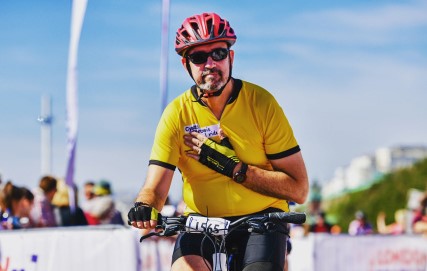
On a much more mundate note, my bright yellow Team CF cycling top has arrived. If you see me flashing past you/crawling past very slowly (depending on where I am in my training schedule) on the National Cycle Route trails in the NW of England then give me a wave. More of that in later blogs.

Simon
Why a Team CF blog?

The simplest answer is that I enjoy writing and taking pictures, however, as with everything, the real reason is far more complicated.  I did consider starting a podcast, but I have neither the wit nor verbal dexterity to make anything like that a worthwhile listen.  I also genuinely contemplated writing a song but vocals are not my strong point.  So, a blog it is.

I don’t have a massive social media following on any of the usual platforms but that doesn’t mean that I can’t have in the future, and if I can put something together that is informative and interesting then maybe, just maybe, it may help someone further down the line.

This won’t be my first charity bike ride. I did one in both 2017 and 2018 but logistically this is the most difficult as I will be crossing the finish line 271 miles from home.  More on that in later instalments.

I was seriously considering doing the ride in fancy dress.  The prospect of raising a few more pounds far outweighs personal dignity, but then I thought of how proud I will be to cross the finish line in a bright yellow Team CF jersey, and the prospect of riding my bike wearing an Elsa costume subsided.  There is also the consideration that this may well have seriously scarred my beautiful granddaughter’s psyche forever if I had gone ahead with that plan.

Now that the decision has been made, my top has been ordered and is already on its way to me.  The Events Team have been amazing and it’s easy to see what a positive impact they must have on CF Fundraising.

Simon

The Team CF Journey Begins

Thanks for joining me!

I’ve decided to venture to pastures new for my 2019 sporting challenge and have joined the incredible Team CF to ride in the London to Brighton Race in September.

I want to use this blog to increase awareness of Cystic Fibrosis (CF), have fun and, of course, hopefully raise some funds for the Cystic Fibrosis Trust.

It seems that since I’ve decided on my approach, CF has never been more in the public domain than it is at the moment. The Five Feet Apart movie is due for a March 2019 release and the UK government are currently being petitioned about their reluctance to fund the new Orkambi drug treatment. All this will help to highlight CF in the UK and hopefully, on the back of that, we will see an increase in donations as the need for research and development is highlighted.

If anything I post about CF needs amending then please do not hesitate to get in touch.

Good company in a journey makes the way seem shorter. — Izaak Walton

post